Is your roof ready for autumn? What a drone inspection can reveal
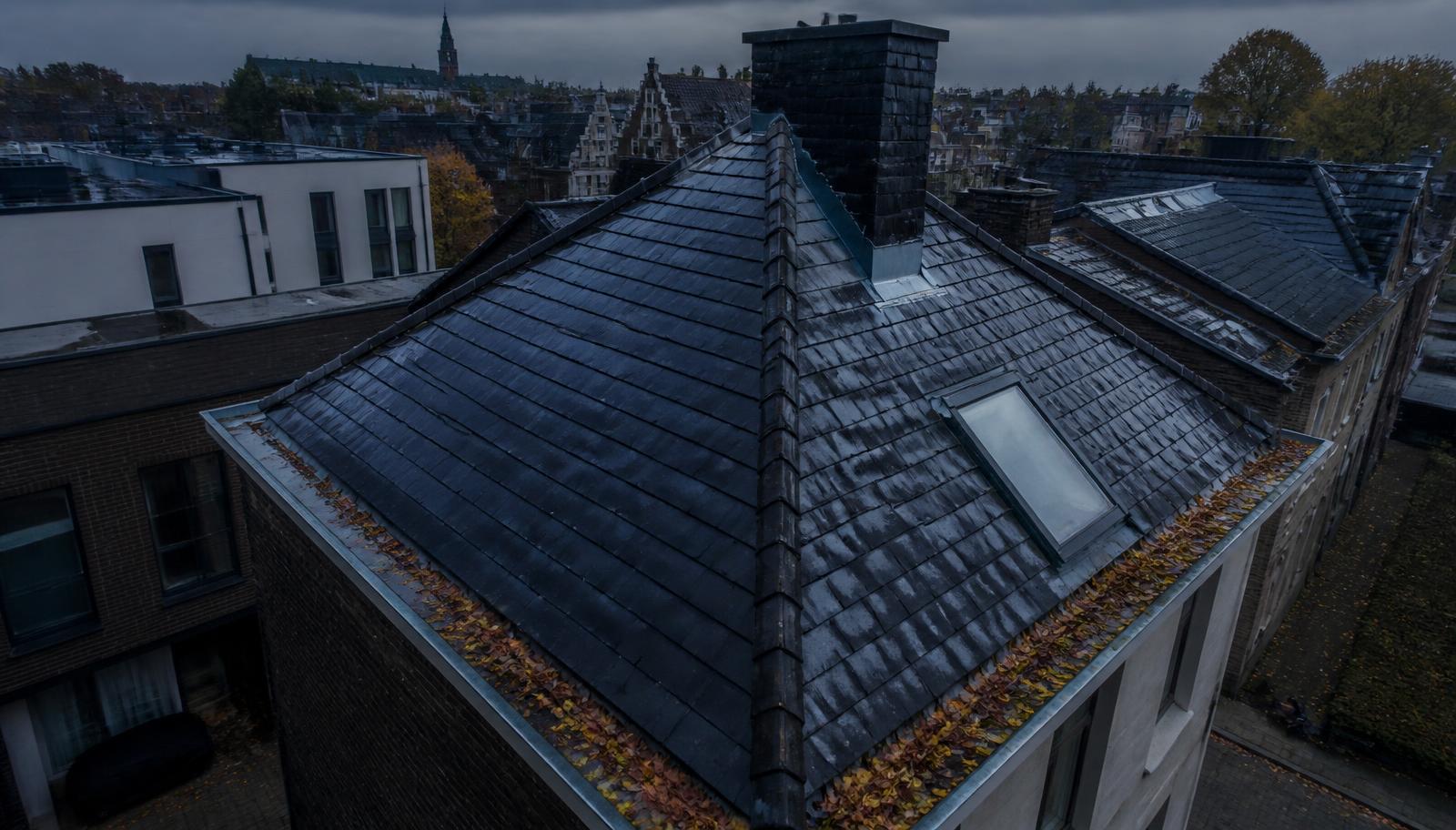
Many parts of a roof are barely visible from the ground. Gutters, roof edges, ridge tiles and the connections around chimneys stay literally out of sight — and that is exactly where the first points of attention appear. A drone inspection can deliver overview and detail imagery of those hard-to-reach zones, without anyone having to climb onto the roof for a first visual check.
One thing should be clear from the start: the imagery shows visible points of attention, but it is not a conclusive diagnosis. Hidden moisture, structural defects or the watertightness of a roof cannot be confirmed by an ordinary visual inspection. Where needed, a roofer or another specialist must carry out further investigation.
Why inspect your roof before autumn?
Autumn is the season that tests a roof hardest. Wind, prolonged rain and falling leaves make existing problems more visible and sometimes worse.
- Wind can shift or carry away loose tiles or slates.
- Prolonged rain puts far more strain on gutters, drains and connections than summer weather does.
- Leaves and organic material clog gutters and roof drains, so water can no longer escape.
- Autumn damp and shade encourage moss and algae growth on roof surfaces and inside gutters.
A check before the bad weather arrives gives you time to decide calmly what needs to happen, instead of having to react once water is already coming in.
Which zones are often overlooked?
Our inspections show that the zones along the edges and around penetrations need the most attention. We assess these points systematically:
- gutters and roof drains;
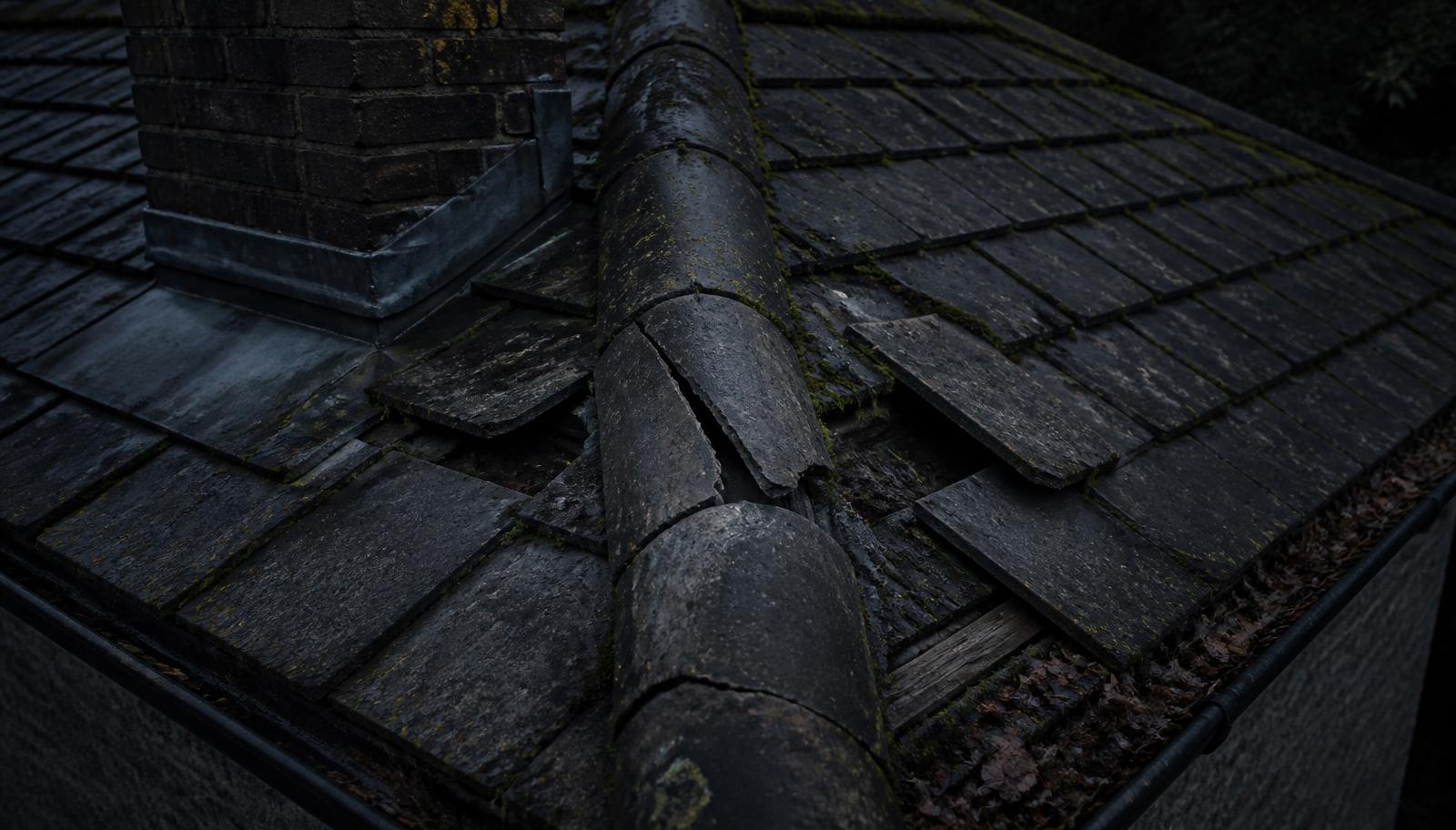
- roof edges and ridge tiles;
- connections around chimneys;
- loose or damaged roof tiles;
- visible cracks or deformations;
- accumulated debris and vegetation;
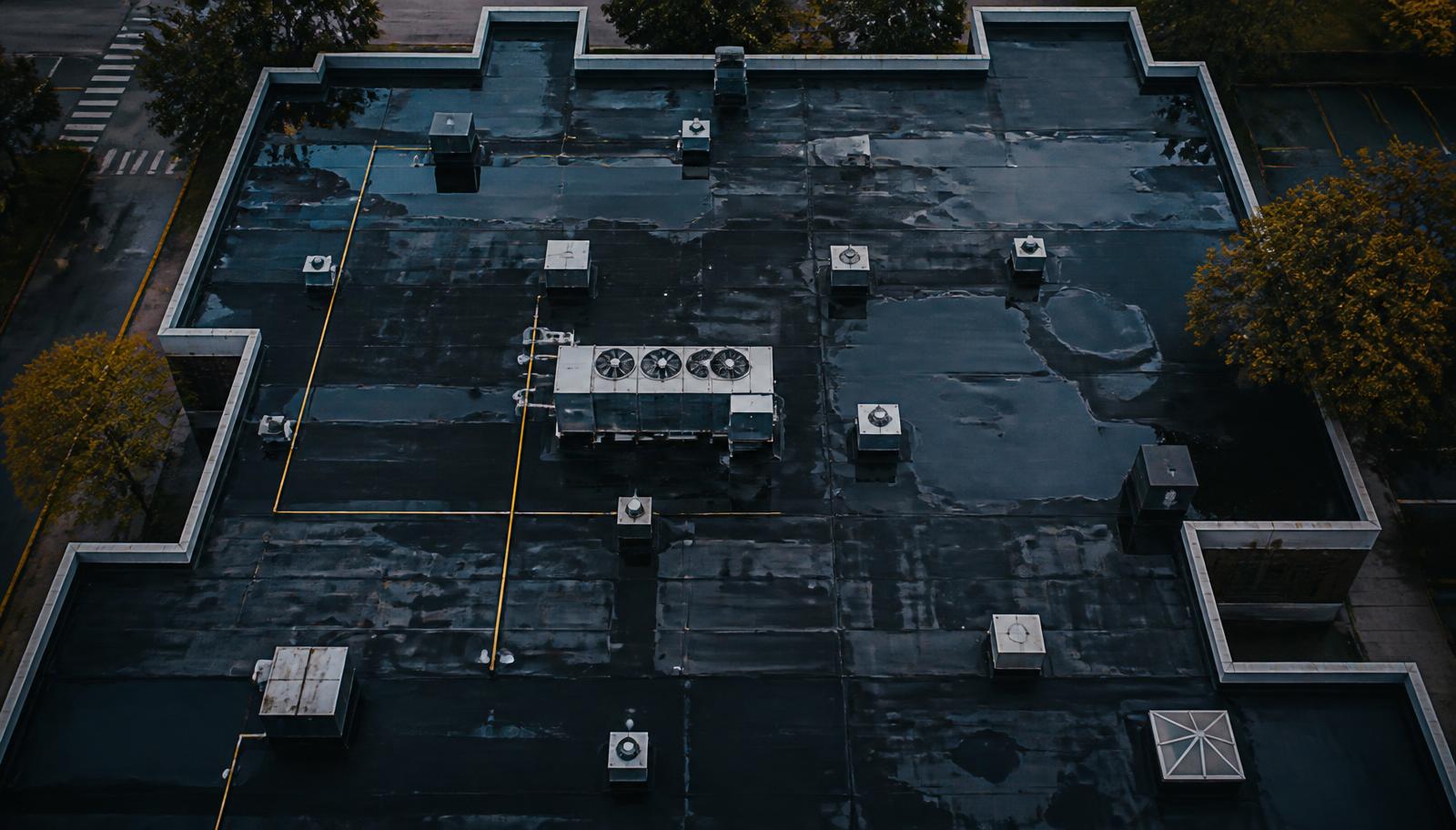
- standing water on flat roofs;
- fixings and edges around solar panels.
Buildwise, the Belgian research institute for the construction sector, stresses in its publications that gutters, roof drains and downpipes must be well maintained and must not become blocked. Those are precisely the components that are hardest to assess from the ground.
What can a drone inspection deliver?
A visual drone inspection primarily delivers imagery that you and your contractor can work with:
- an overview of the entire roof area;
- detailed photos of the points of attention identified;
- visual documentation for owners, building managers and contractors;
- reference material for a later comparison;
- support in preparing maintenance or a quotation.
For building managers and property managers that last point is often the biggest advantage: a file with clear imagery makes discussions with owners, insurers or contractors far more concrete than a verbal observation.
What can it not establish with certainty?
We are explicit about this. An ordinary visual drone inspection cannot confirm:
- whether a hidden leak is present;
- whether there is moisture in the insulation;
- whether there is structural damage to the substructure;
- whether the roof is genuinely watertight.
For inspecting flat roofs, for example, Buildwise describes specialised monitoring systems and measurements. That kind of investigation goes beyond what is visible in a photo and belongs to a roofer or a specialised engineering firm.
An inspection is therefore a first step: it shows what deserves further investigation, and what does not.
How does a DROPS inspection work?
Every assignment follows the same structure, from a private home to a commercial building:
- intake and assessment of the location;
- check of airspace, surroundings and weather conditions;
- safe preparation of the flight;
- capture of overview and detail imagery;
- selection and structuring of the findings;
- clear handover to the client.
You do not receive an unfiltered folder with hundreds of photos, but an organised set of images with the points of attention identified.
Safety and privacy
A flight is always prepared carefully: we assess the airspace, the surroundings, accessibility and the weather conditions before take-off.
We only collect imagery that is relevant to the assignment. Professional drone activities must also take privacy and data protection into account; the EASA Privacy Handbook provides a clear framework for this. Imagery of neighbours, passers-by or adjacent properties is not part of a roof inspection.
Conclusion and invitation
An inspection is not a repair. It does make visible what you cannot assess from the ground, and helps you decide more precisely which next step is needed: wait, plan maintenance or bring in a specialist.
Would you like to know which parts of your roof or building are hard to see? Send us the address and a few photos taken from the ground. DROPS Belgium will assess free of charge whether a drone inspection is possible and useful at your location.