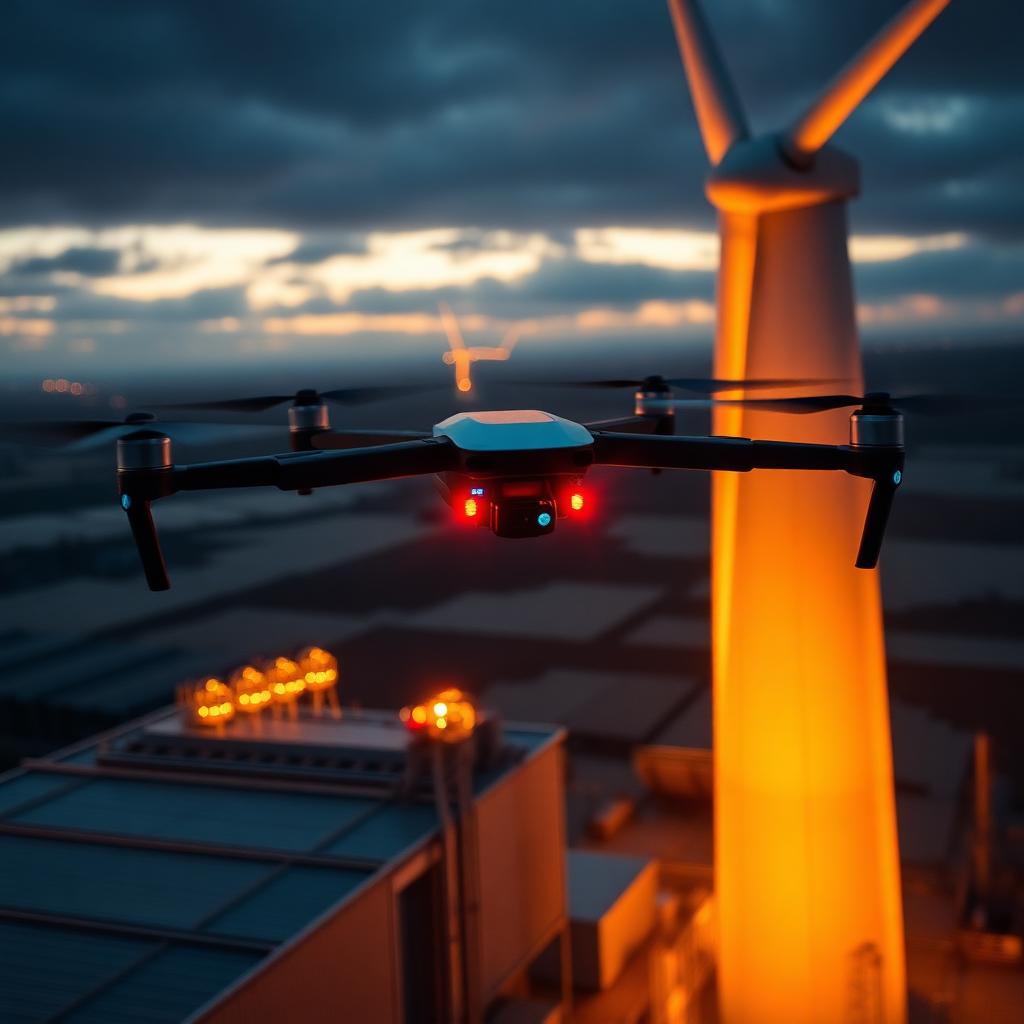
Every crack, every leak, every detail — captured from the air.
From residential roofs to wind turbines, factory halls and historic buildings: our pilots deliver detailed inspections with enterprise-grade drones, thermography and documented reports — without scaffolding, ladders or production stoppages.
One methodology, eight sectors.
From a small roof to an entire industrial site — we adapt the sensor and flight altitude, but precision stays the same.
What you don't see costs you the most later.
80% of roof damage starts with a problem that is invisible from the ground. By the time the ceiling leaks, the damage is ten times more expensive than timely detection. A periodic drone inspection catches that in time — for a fraction of the cost of a traditional survey.
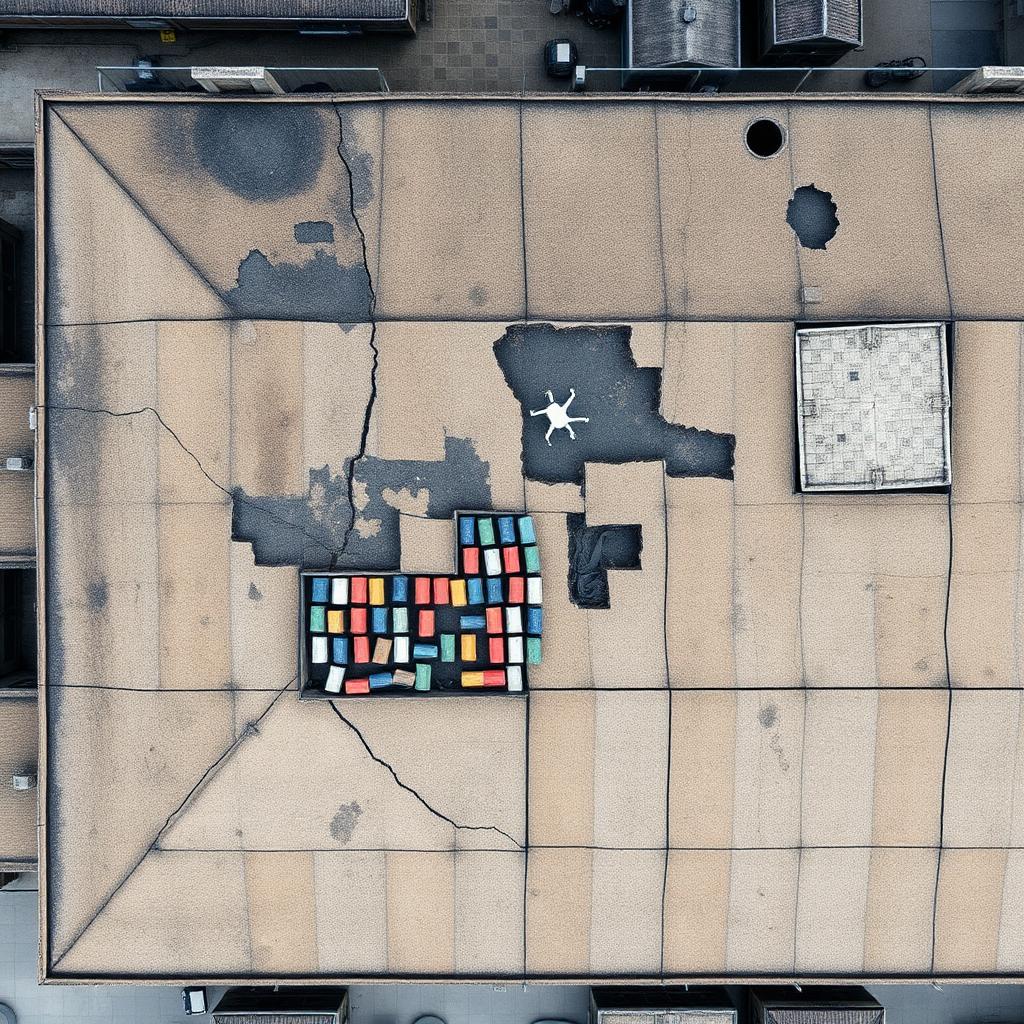
The right sensor for every inspection.
Our drones carry interchangeable payloads. For each assignment we choose the sensor that provides the answer.
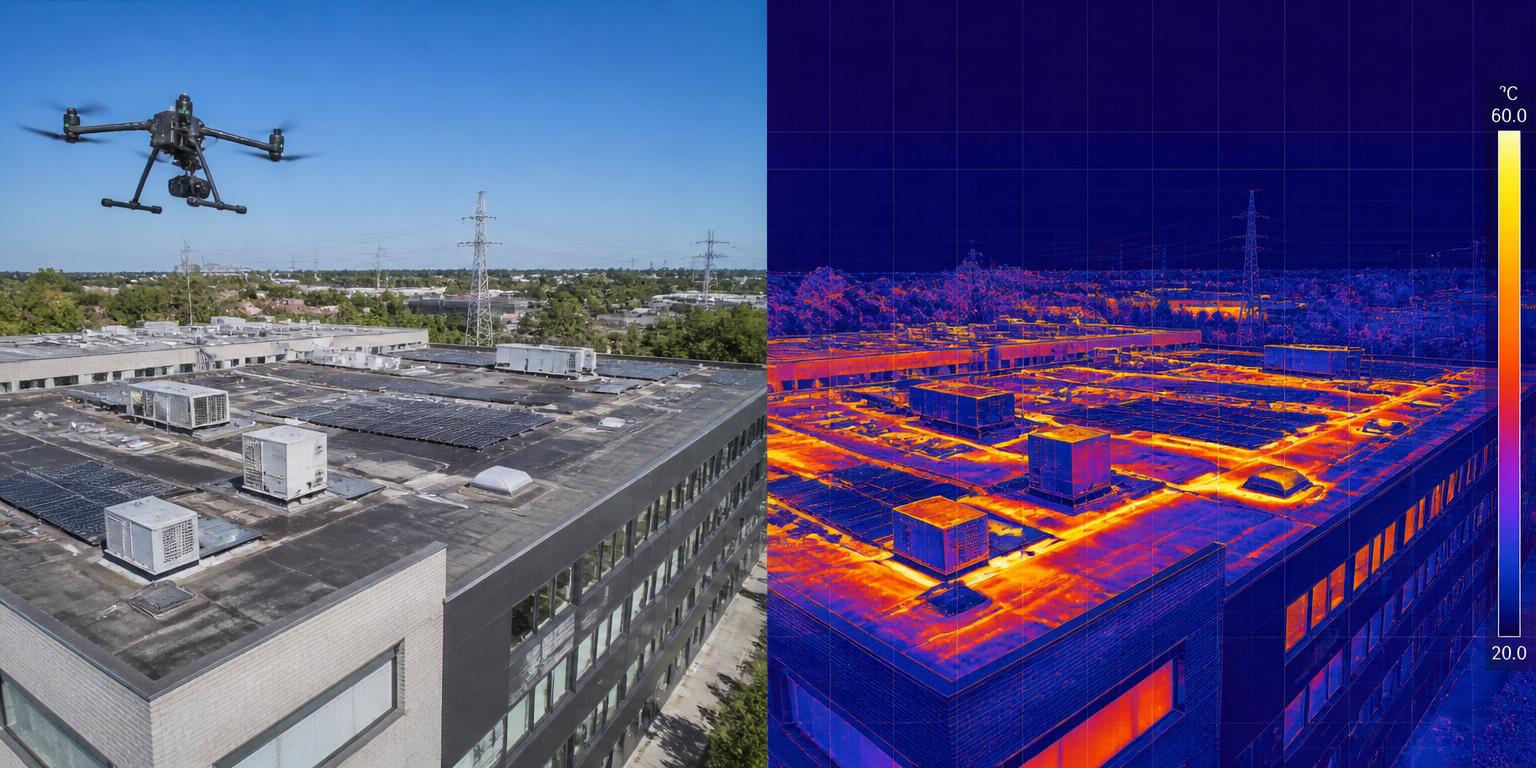
From RGB to thermal image — in a single flight.
Our dual-sensor combines a 45MP RGB camera with a calibrated thermal module. Heat leaks, moisture in insulation and defective solar cells become visible without a second flight.
Six steps, from intake to digital dossier.
- 1Intake & objectiveYou provide us with the location, building type and reason for the inspection (purchase, insurance, maintenance, damage).
- 2Flight plan & airspaceWe check airspace, obstacles, neighbouring buildings and, if required, request authorisation from skeyes.
- 3ExecutionCertified pilot flies a fixed grid pattern — so we don't miss a single roof surface or component.
- 4Image processingImages are stitched, geo-referenced and, where needed, converted into an orthomosaic or 3D model.
- 5AnalysisOur analyst marks defects, measures surfaces and categorises them by urgency.
- 6Digital reportYou receive a PDF dossier within 48h with annotations, photos, map and recommendations.
Drone inspection vs. traditional method
Scaffolding, aerial platforms or rope access are expensive, time-consuming and risky. The drone does the same job in a fraction of the time — with better documentation.
More than photos — a complete technical dossier.
Every inspection concludes with a structured report you can use to negotiate, insure or plan maintenance. Black and white, with photographic evidence and measurable data.
- High-resolution photos per roof surface, façade or component
- Thermographic imagery where relevant
- Orthomosaic map with measurements to scale
- Annotated defect report (urgency + recommendation)
- Optional 3D model or digital twin
- Fully insured and EASA-compliant execution
Four moments where a drone inspection pays off.
Clients often recoup the investment with a single decision.
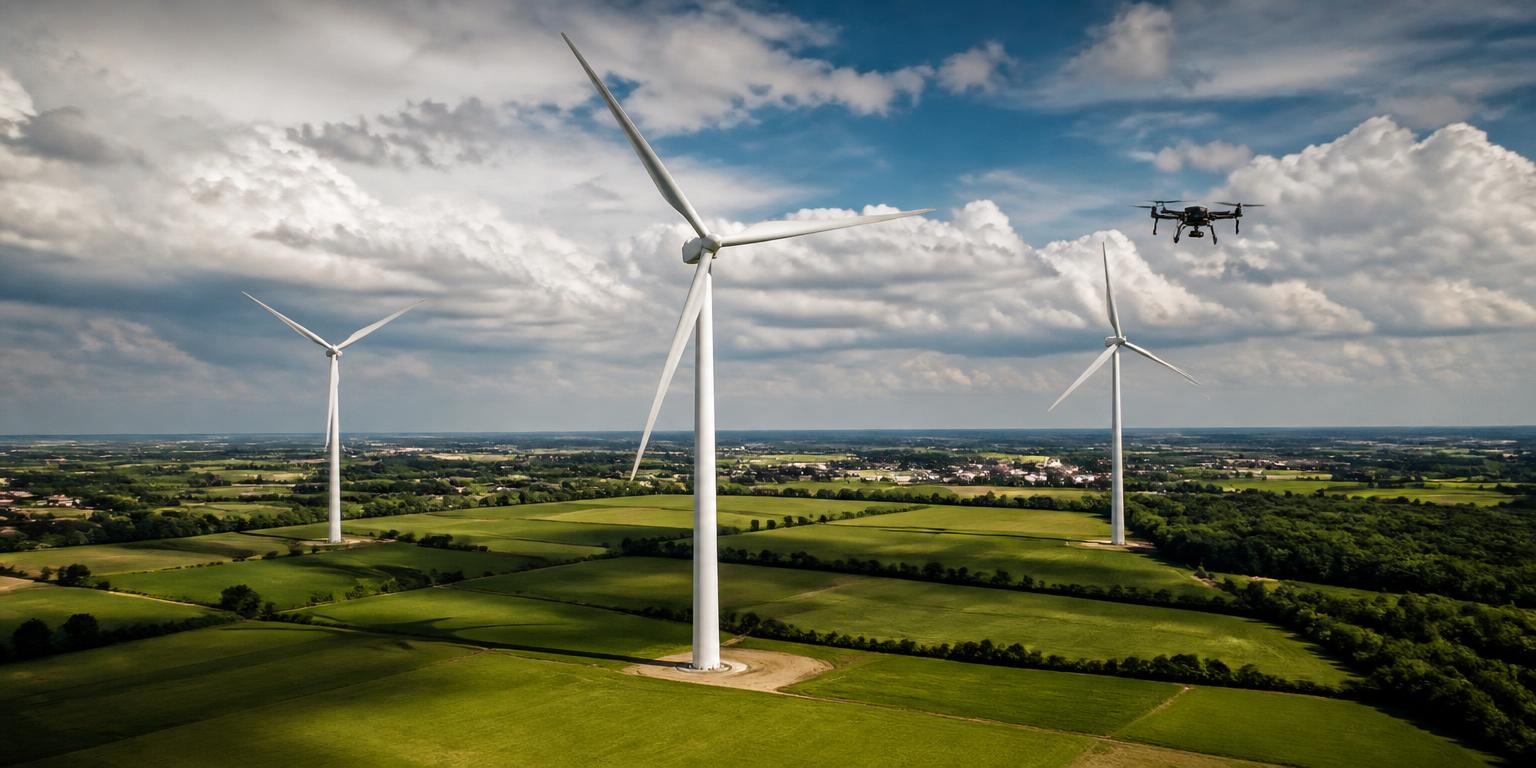
Wind farm, West Flanders — 3 turbines.
Annual blade inspection of three 3 MW turbines. Instead of a rope-access team and a full stop per turbine, our pilot carried out all three inspections in a single morning. Result: 6 defects detected (including 2 critical erosions at the blade root) and reduced downtime cost.
What you often want to know before an inspection.
How long does a roof inspection take?
A typical home takes 20 to 40 minutes on site. An SME warehouse or industrial roof: 1 to 3 hours, depending on surface area and level of detail.
Do I need to shut down the building or installation?
In most cases, no. For wind turbines, a short standstill suffices (~15 min per blade). Factories and offices remain fully operational.
What if weather conditions are poor?
In case of rain, fog or wind >10 m/s, we postpone. You are notified in time and we reschedule free of charge.
Can I use the report for my insurer?
Yes. Our report includes date, GPS coordinates, high-resolution photos and, where needed, thermography — sufficient for most insurance claims and expert assessments.
Is the inspection GDPR- and privacy-compliant?
Absolutely. We adjust the flight route to avoid neighbouring plots, and imagery is kept strictly confidential within your file.
Do you work throughout Belgium?
Yes. Standard travel is included within 15 km of Geraardsbergen. Beyond that, we charge a limited mileage fee — always communicated in advance.
Get full insight into your building or installation.
Request your no-obligation quote. We'll send you a tailored proposal within 24 hours.